
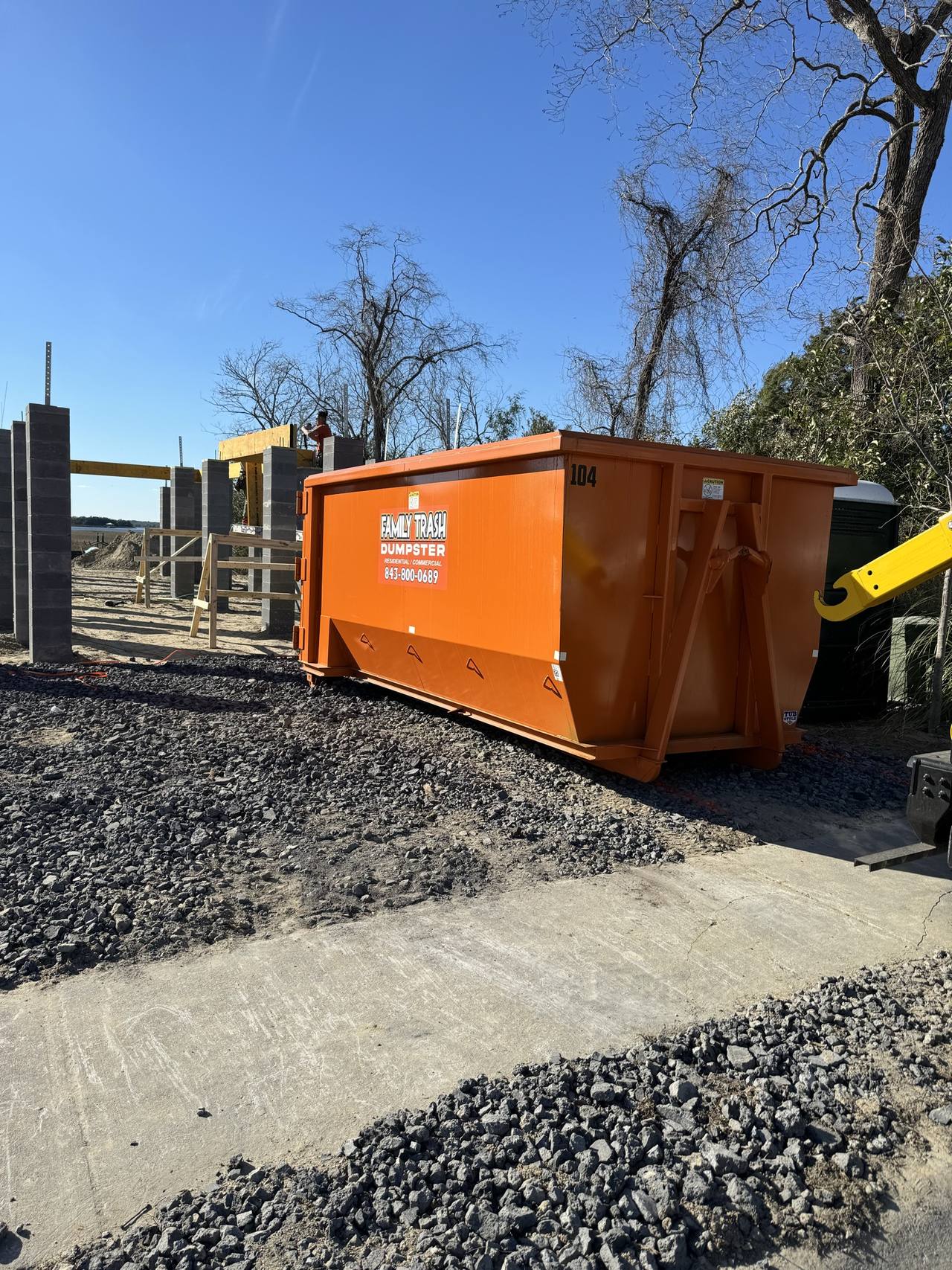
When a storm comes through the Lowcountry, the cleanup is its own project. Downed limbs, ruined fencing, soaked drywall, and a yard full of debris add up fast, and the regular curb pickup isn't built to take it. A roll-off dumpster gives you one place to put all of it while you work through the mess.
Photograph everything before you haul it
This is the step people skip when they're in a hurry. Before anything goes in the can, take pictures of the damage and of what you're throwing out. Get the room, the water line on the wall, the ruined furniture, the fence sections. If you end up filing a claim, the adjuster is going to ask what was there, and a phone full of photos is a lot easier than describing a pile that's already gone. Once it's documented, you can clear at your own pace.
What storm debris fits
Most of what a storm leaves behind goes in a standard can: branches and brush, fence sections, damaged furniture, drywall, insulation, carpet, and general debris from a flooded room. The 13-yard handles a typical yard-and-house cleanup. The 17-yard gives you more room when the damage runs deeper, and the 22-yard is there when a whole floor has to come out.
Wet debris is heavier than it looks
This is the part that catches people. Soaked drywall, waterlogged carpet, wet sod, and rain-heavy brush weigh several times what the same material weighs dry. A can that looks half full can already be carrying a serious load.
If you're pulling up soaked sod, brick, block, or any concrete, that goes in the 7-yard, the low can built for heavy material. Mixing a pile of wet masonry into a big can is how a cleanup turns into a problem. When you call, tell us what the debris actually is and we'll point you at the right size.
What has to stay out
A few things don't go in no matter how the storm left them. Batteries, chemicals, paint and other liquids, fuel cans, propane tanks, and electronics all have to be handled separately. Storms tend to surface exactly this kind of thing out of a flooded garage or shed, so set it aside as you work rather than sorting it back out later. If you're not sure about something, ask before it goes in. Our what goes in the dumpster page covers the rest.
Keep the yard debris separate if you can
After a named storm, local governments sometimes run a separate curbside pickup for vegetative debris. It's worth checking whether one is running in your area, because those programs are usually limited to limbs and brush and won't take drywall, furniture, or anything from inside the house. If a pickup is happening, putting your yard debris at the curb and saving the can for construction and household debris stretches the rental further. Our yard waste service page covers what counts as yard debris.
Where to put the can after a storm
Driveways are still the easiest spot, but a storm changes what's usable. Think about where the truck has to come in and where the can will sit. Watch for downed lines, standing water, soft ground that a loaded truck could sink into, and limbs still hanging over the drop spot. Tell us what you're looking at when you call and we'll work out placement. You don't need to be home for the drop, which helps when you're running between the house, the insurance company, and everything else.
Get on the schedule early
After a big storm, every dumpster company in the area gets slammed at once, and cans get tight. The sooner you're on the schedule, the sooner you can start clearing. If you already know the damage is bad enough to need a can, call before you've finished sorting through it. Having one sitting there ready beats waiting while the whole county calls at the same time.
What's included, and swaps
Delivery, pickup, and disposal are in the price, and rentals run from a day up to 30, which gives you time to work through a cleanup that doesn't finish in a weekend. If you fill up before you're done, we'll swap the can so you can keep going. If you've got equipment or materials to move rather than debris, we run a flatbed for that.
A local crew helps after a storm
Tony runs the trucks himself and knows the Charleston streets, which matters when roads are a mess and access is tight. Call and you get a person who can tell you what's realistic for your street and your pile, not a call center reading a script.
Cleaning up after a storm? Call or text Tony at (843) 800-0689 and we'll get a can to you, or order online once you know the size.
Need a dumpster in Charleston? Call or text Tony at (843) 800-0689, or order online.
(843) 800-0689 Get instant pricing