
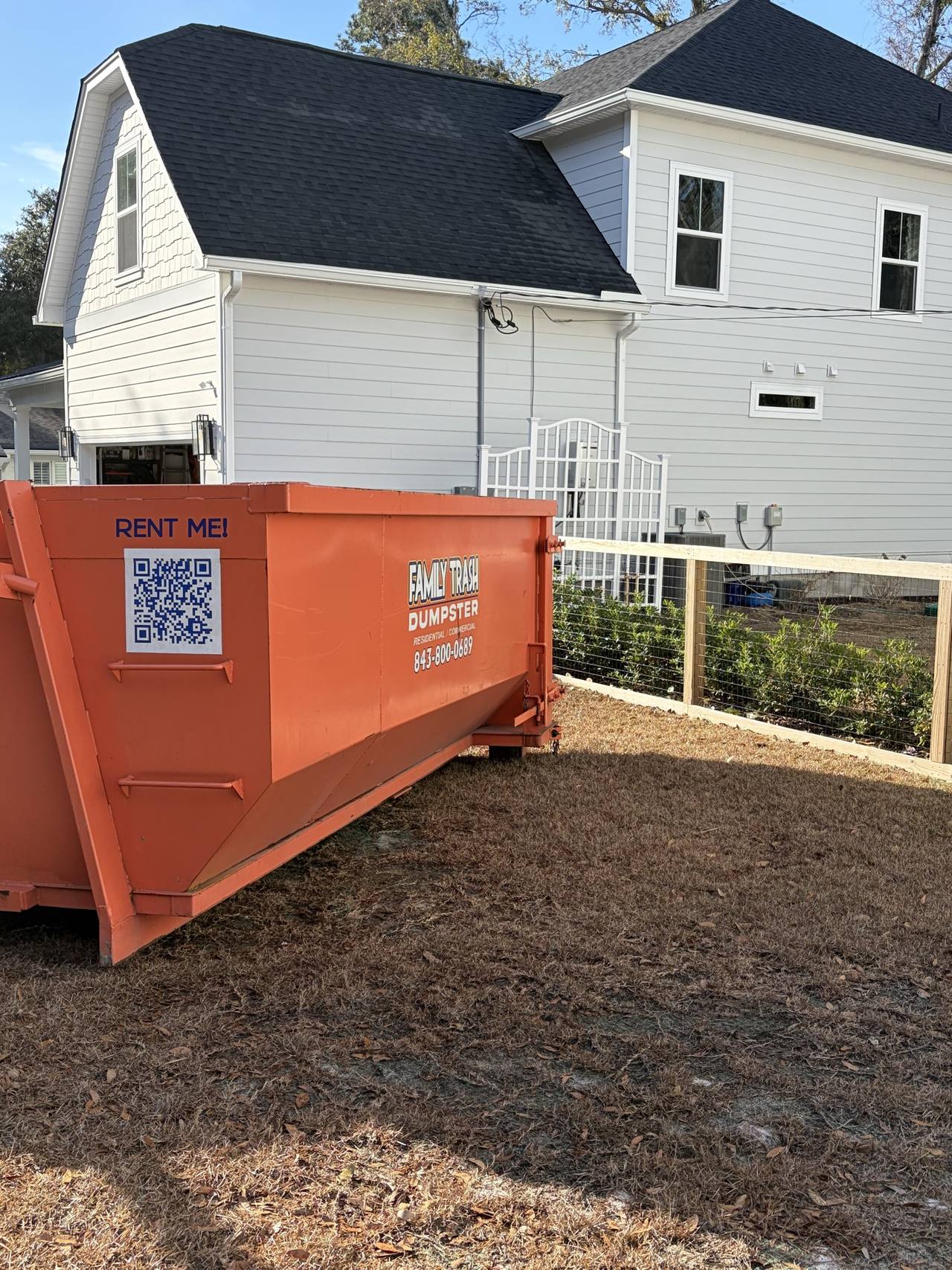
A framing crew can lose half a day standing around a pile of scrap with nowhere to put it. The work is done, but the site is blocked, and the next trade can't start until the mess clears. Debris handling rarely shows up on a project schedule, yet it stops jobs more often than most people expect. On a Charleston remodel or new build, where lots are tight and trucks have to thread narrow streets downtown or on the islands, having the right container in the right spot is part of keeping the calendar honest.
Here's the short version. Plan where the debris goes before the first wall comes down, get a dumpster sized for the actual material, and arrange swaps so a full box never holds up the crew. Do that and waste stops being the thing that slows you.
Why debris stalls jobs more than people think
A construction site is a sequence. Demo, then framing, then mechanical, then drywall, and so on. Each step leaves something behind, and if that something piles up, the next crew either works around it or waits. Workers stepping over broken drywall and old shingles slow down without realizing it. Trip hazards turn into injuries. And a site that looks like a junk pile is harder to inspect, harder to photograph for the client, and harder to feel good about.
The fix isn't complicated. A dumpster on site means debris goes straight from the hand to the box instead of into a pile that someone has to handle twice. That second handling, moving a pile you already made, is pure lost time. On a tight Charleston lot you may not have room to let scrap accumulate at all, which makes the on-site container even more useful.
Match the dumpster to the material
This is where a lot of jobs go sideways. The material on a construction site is not all the same weight, and the wrong box for the wrong load creates problems.
Heavy, dense material is its own category. Concrete, dirt, rock, brick, sod, and roofing shingles all weigh far more than they look. For those, the 7-yard is the size to use. It's built for dense loads, and clean heavy material like clean concrete goes to the recycle plant instead of the landfill. If you're tearing off a roof or breaking up a slab, that's the box.
For everything else, framing scrap, drywall, old cabinets, wood, brush, and general remodeling debris, the larger sizes do the work. The 13-yard handles a single-room remodel or a steady trickle of mixed debris. Go up to the 17 or 22 for a whole-house renovation or a build that generates a lot of bulky material fast. You can see all our dumpster sizes laid out together if you're trying to pick.
One rule that trips up new contractors: don't mix heavy material into the big boxes. The 13, 17, and 22 are for household and remodeling debris, not concrete or dirt. Keep the heavy stuff in the 7-yard and the rest separate. It keeps the loads legal and keeps your pickup from getting refused. If you're not sure what belongs where, what goes in a dumpster spells it out.
Swap-outs keep the calendar moving
On a job longer than a few days, one dumpster usually isn't enough. The box fills, and if you have to wait days for an empty one, the crew is stuck. That's the timeline killer.
The way around it is to plan swaps with the rental schedule. On bigger jobs we'll pull a full box and drop an empty so the work never pauses for waste. Rentals run anywhere from one to thirty days, so you can hold a container through a long phase or cycle through several on a fast one. The point is to think about it up front instead of calling in a panic when the box is overflowing and the inspector's coming Tuesday.
If you're working across the Lowcountry, it helps to know we cover Charleston and a stretch of the towns we serve nearby, so a multi-site builder can usually keep the same setup from job to job.
A few things to sort before delivery
Think about placement before the truck shows up. The driver needs a clear, firm spot to set the box, and on a downtown lot that might mean the driveway or a section of yard you've kept open. A container that's hard to reach is a container that's hard to swap.
Know what can't go in, too. Batteries, chemicals, and electronics don't belong in any roll-off and have to be handled separately. Sorting those out before they end up in the box saves a headache at pickup.
If you've got a build coming up and you want to walk through sizing and swap timing before you commit, call or text (843) 800-0689. Tony answers his own phone, seven days a week, and it's a five-minute conversation that can save you a stalled afternoon later.
Need a dumpster in Charleston? Call or text Tony at (843) 800-0689, or order online.
(843) 800-0689 Get instant pricing