
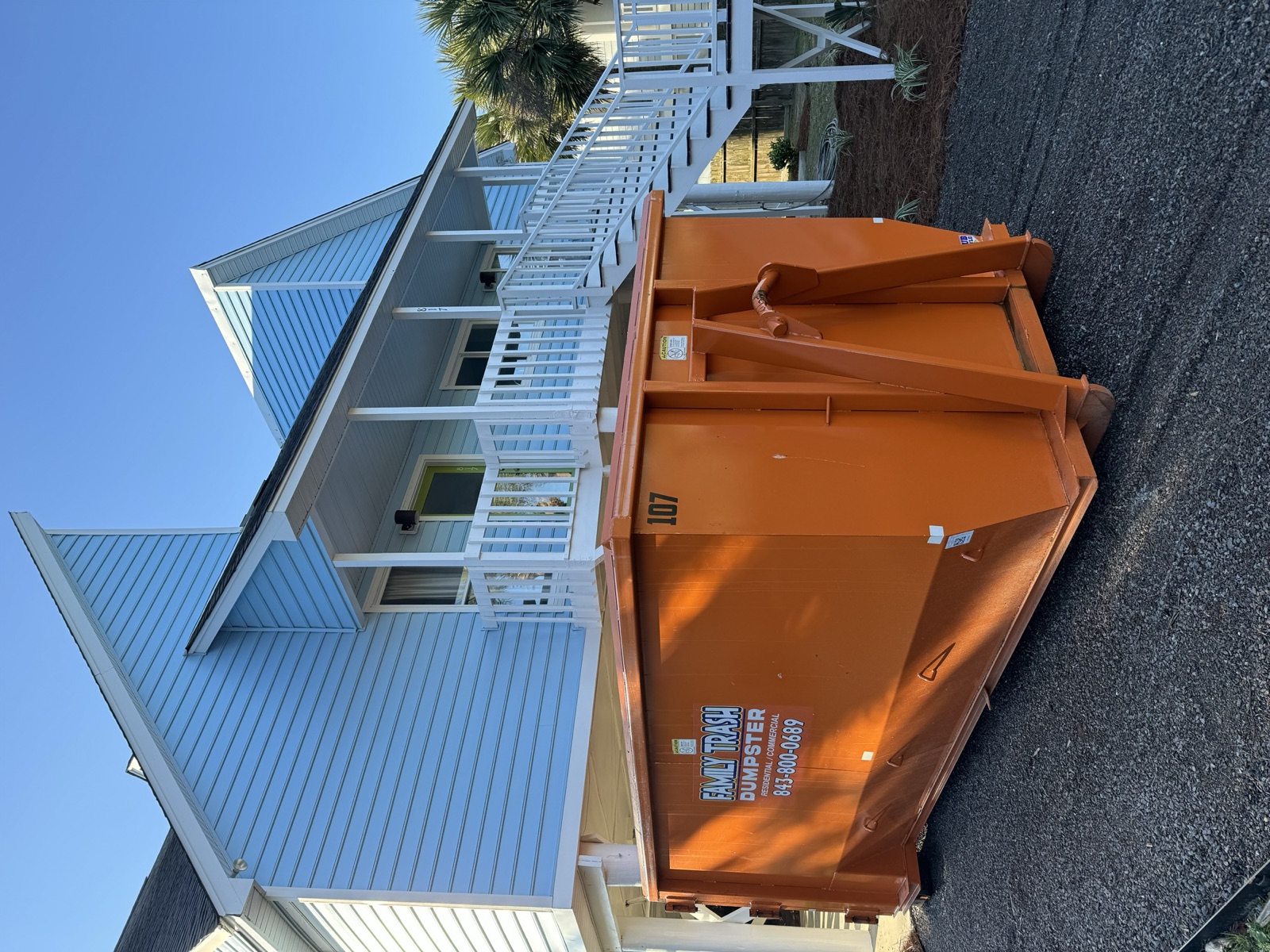
If you're tearing out a kitchen or gutting a bathroom in Charleston, most of the debris is easy. Old cabinets, drywall, tile backer, busted vanities, all of that loads right into a roll-off and goes away. The part that trips people up is the small pile of stuff that should never go in a dumpster at all. Half-empty paint cans, a jug of pool chemicals from the garage, the dead smoke detector, a box of old batteries. Those need a different plan, and it pays to sort them out before the container shows up so nothing slows you down.
Here's how to think about it as a homeowner or contractor working a job here on the coast.
What counts as hazardous, and why it can't go in the dumpster
We can't take batteries, chemicals, or electronics in any of our containers. That isn't us being picky. It's how the disposal facilities work. When a roll-off gets emptied, the load goes to a landfill or a recycle plant, and those sites have firm rules about what they'll accept. Anything that can leak, catch fire, or leach into the ground gets rejected, and a rejected load means the entire container has to be re-sorted before it can be dumped.
The usual offenders on a renovation:
- Paint, stain, thinner, and solvents
- Pool and yard chemicals, pesticides, fertilizer
- Motor oil, gasoline, propane tanks, aerosol cans
- Batteries of any kind, from AA to car and tool packs
- Electronics like old TVs, computers, and that pile of dead remotes
- Fluorescent tubes and CFL bulbs
- Anything labeled flammable, corrosive, or toxic
Two big ones get missed on older Charleston homes. If your house predates the late 1970s, you may run into lead paint or asbestos in flooring, popcorn ceilings, or pipe wrap. Both need a licensed abatement pro to test and remove. That material never goes in a rental dumpster, so handle it separately before any demo starts.
Set the hazardous stuff aside first
Before the container arrives, walk the garage, the shed, and under the sinks. Pull anything from the list above and stage it in one spot, away from where the crew will be tossing debris. This does two things. It keeps banned items out of the load by accident, and it gives you a clear picture of how much you're actually dealing with.
For a quick reference on what's fine to toss versus what isn't, take a look at what goes in a dumpster. Keep it handy and point your crew to it, because the person carrying drywall out at the end of a long day isn't always reading labels.
Where the banned items actually go
Charleston County runs household hazardous waste drop-off events and collection sites for exactly this material. That's the right home for your paint, chemicals, and batteries. They take it for free in most cases, and they handle it the way the law requires.
A few quick rules of thumb:
- Paint that's latex and fully dried out can sometimes go in regular trash with the lid off, but oil-based paint always goes to hazardous-waste drop-off. When in doubt, drop it off.
- Electronics go to an e-waste recycler. Many big-box stores take old TVs and computers, and the county runs e-waste days too.
- Batteries and bulbs often have take-back cans at hardware and home stores.
- Propane tanks go back to a refill exchange, not the trash.
Knock these out in one trip before demo day so they're off the property and not tempting anyone to chuck them in the container.
What the dumpster is for
Once the hazardous pile is handled, the rest of a renovation is straightforward roll-off territory. Our 13, 17, and 22-yard containers take household junk, furniture, wood, drywall, cabinets, fixtures, and general remodeling debris. A bathroom or single-room remodel usually fits fine in the 13-yard. A full-house gut or a big kitchen tends to call for the 17 or 22.
One thing to plan for separately. If your project includes demo of tile, brick, concrete, or you're pulling roofing shingles, that heavy material only goes in the 7-yard. It's the one container built for dense loads, and clean heavy material from it heads to the recycle plant. Don't mix that into a bigger box, because the weight will stop it from getting picked up. If you're not sure which way your debris breaks down, look over all our dumpster sizes or just call and describe the job.
Rentals run from a single day up to 30, so you can keep the container through the messy stretch and we'll pull it when you're done. On larger projects we can swap out a full one for an empty.
Easiest path through it
The short version: pull the chemicals, batteries, and electronics out first and run them to county drop-off, then let the dumpster handle everything that's left. If you're somewhere in our the towns we serve, Tony handles delivery and pickup himself and can talk you through which size fits before anything lands in your driveway.
Got a renovation coming up and want a straight answer on what to order? call or text (843) 800-0689 and we'll get you set.
Need a dumpster in Charleston? Call or text Tony at (843) 800-0689, or order online.
(843) 800-0689 Get instant pricing