A storm rolls through James Island, and by the weekend half the yards on the street have a pile of snapped limbs and pulled-up brush sitting by the road. The fastest-looking option is to drag it all to the back of the lot and light a match. I get why people do it. But around Charleston, burning yard waste causes more headaches than it solves, and a lot of folks don't realize how much trouble a brush fire can turn into.
Here's the honest breakdown of why burning is a bad call, and the simpler ways to get that pile gone.
Burning Yard Waste Is Often Against the Rules Here
South Carolina has open-burning regulations, and a lot of the towns and neighborhoods around Charleston add their own rules on top of that. Inside city limits and in most HOA-controlled areas, open burning is flat-out not allowed. Even where it is technically legal on larger rural lots, you usually need to follow specific conditions: certain hours, a clear distance from buildings and property lines, and no burning when conditions are dry or windy.
The Lowcountry gets hot and dry in stretches, and we sit in a region with a lot of pine. A pile that looks tame at noon can throw embers a long way once an afternoon breeze picks up. Fire departments here respond to escaped yard fires more often than people think, and if your fire spreads to a neighbor's fence or a wood line, that's on you.
If you're not sure what's allowed where you live, call your local fire department or town hall before you ever strike a match. The rules change from one town to the next, and the ones I serve across the towns we serve are not all the same.
Smoke Is a Bigger Problem Than It Looks
Green yard waste, wet leaves, and fresh-cut brush don't burn clean. They smolder. That thick white smoke drifts straight into your neighbor's open windows and across the road where people are driving. For anyone nearby with asthma or breathing issues, a smoldering brush pile is a genuine problem, not just a nuisance.
There's also the stuff people toss on the pile that should never be burned. Pressure-treated lumber, painted wood, old fence boards, and anything with chemicals on it put real toxins into the air. Once it's on the fire, it's in the air everyone around you is breathing.
What to Do With Yard Waste Instead
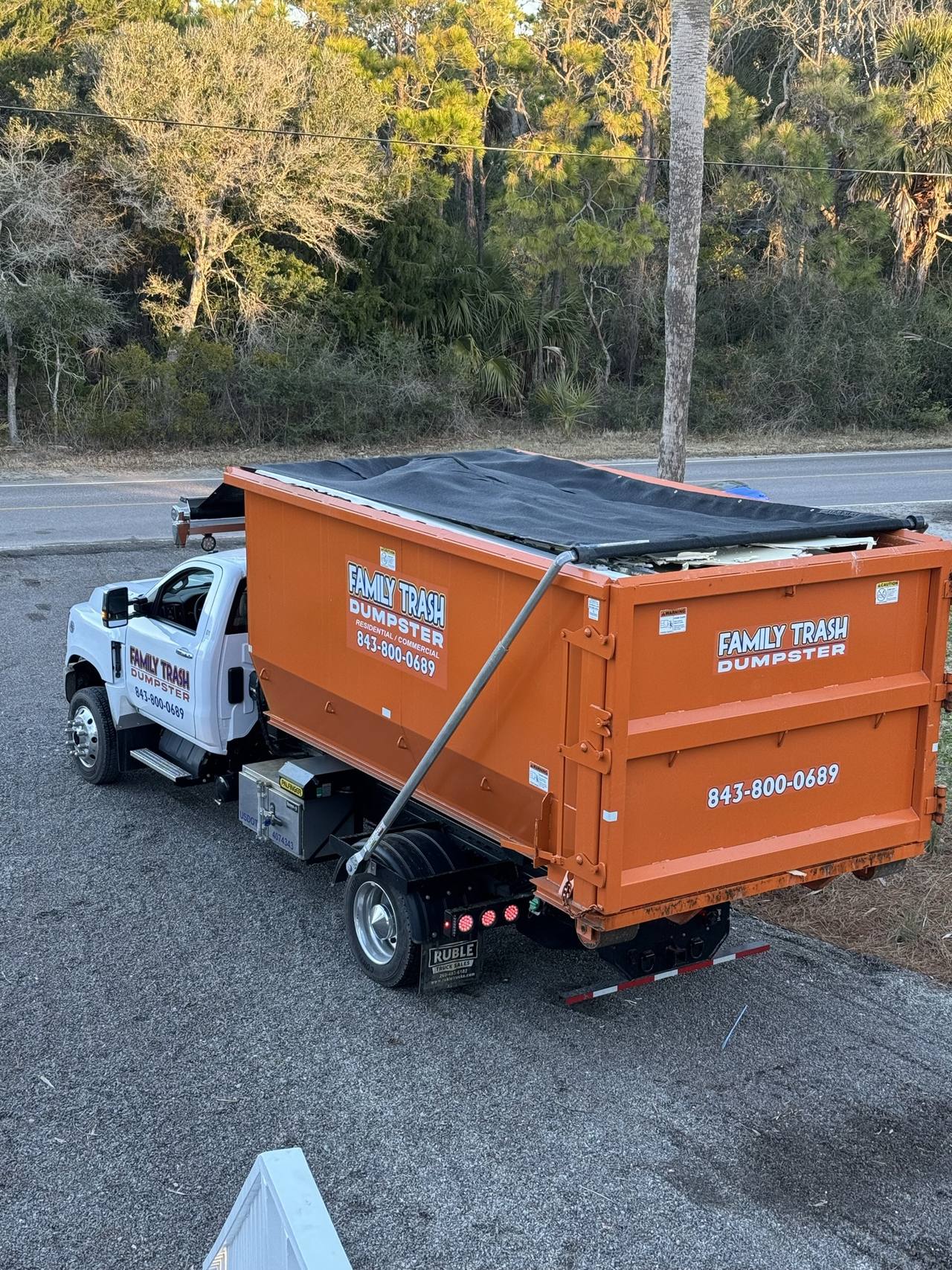
The simplest fix is to put the debris in a container, fill it on your own schedule, and have it hauled off and disposed of properly. That's the whole reason a roll-off dumpster makes sense for yard cleanup. You're not standing over a fire for hours. You drop branches and brush in as you clear, and when you're done it leaves.
For yard waste, the 13/17/22-yard sizes are the ones you want. Those take household junk, furniture, wood, and yard brush, so limbs, leaves, pulled shrubs, and storm debris all go right in. A 13-yard handles a normal weekend cleanup or a medium storm pile without much trouble. If you've got a big lot or you're clearing years of overgrowth, step up to the 17 or 22.
One thing to keep straight: yard brush and wood are fine in those sizes, but they are not for heavy, dense material. If your project mixes in dirt, sod, rock, or old concrete from a removed walkway, that heavy stuff goes in the 7-yard instead, which is the only size built for dense loads. When you're sorting out what goes where, the rundown on what goes in a dumpster lays it out plainly.
A Few Tips for Loading Yard Debris
A little planning makes a yard-waste load go further:
Cut long limbs down so they lay flat instead of teepeeing up and wasting space. Throw the heaviest, bulkiest pieces in first along the bottom, then pack lighter brush and leaves into the gaps. Keep the load level with the top rail so it's safe to haul.
If you're tackling a big property over a few days, that's fine. Rentals run anywhere from one day up to thirty, so you can take your time and still keep the pile out of the yard the whole way through.
When You're Ready to Clear It Out
Burning feels quick, but it carries real risk, possible fines, and a smoke problem your neighbors won't thank you for. Dropping a dumpster in the driveway and filling it on your own time is the cleaner way to handle it, and the debris actually ends up where it belongs.
If you want help figuring out which size fits your cleanup, or you just want it on the schedule, call or text (843) 800-0689. I answer my own phone seven days a week, and I'm glad to walk you through it.
Need a dumpster in Charleston? Call or text Tony at (843) 800-0689, or order online.
(843) 800-0689 Get instant pricing