
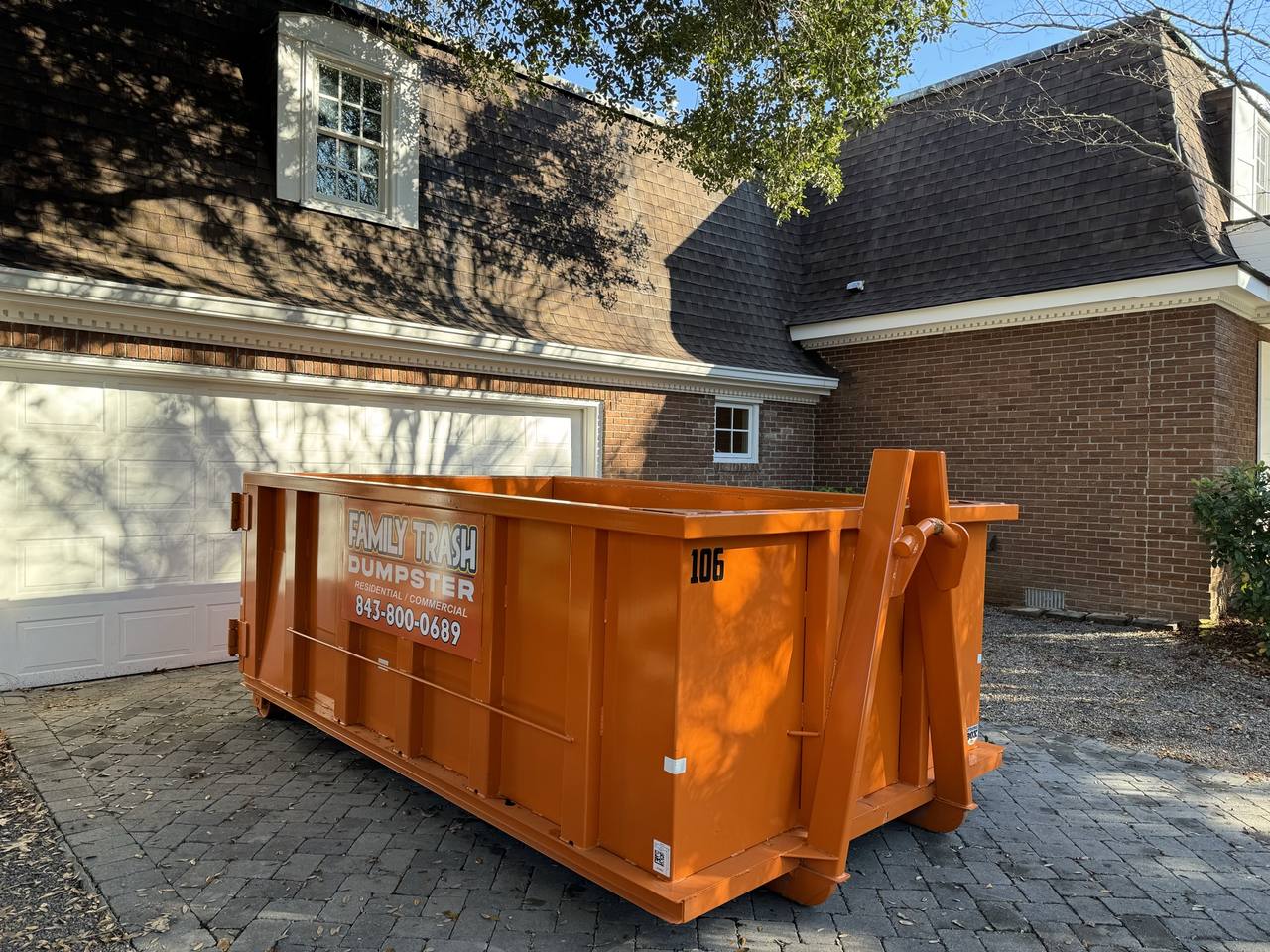
Ask a contractor what slows a job down and you will hear about weather, inspections, and material lead times. Debris rarely makes the list, right up until the container is full on a Tuesday and the crew is stacking drywall against the fence.
A roll-off is not complicated. What makes it work on a job site is planning it around the schedule instead of ordering one when the mess gets bad.
A full container stops more than the cleanup
On most builds the container is the choke point. Framers throw off scrap, drywall crews throw off offcuts, and finish trades throw off packaging. When it is full, all of that has nowhere to go.
What happens next costs more than the haul. Material gets set on the ground, then it gets rained on, walked through, and handled a second time. Guys who should be building spend an hour a day moving debris around the site. On a tight lot the staging heap starts blocking the very access the truck needs to come swap it.
Debris stalls jobs more than most schedules account for, and it is one of the few delays entirely inside your control.
Size to the phase, not the entire job
The most common sizing mistake on a build is ordering for the project instead of for the phase in front of you.
Demo fills a container fast and heavy. Framing fills it with bulky wood scrap. Finish work fills it slowly and steadily with packaging and cutoffs. Those want different containers, and running the wrong one means either swapping constantly or paying to move air.
Dense material, meaning concrete, dirt, rock, brick, sod, and roofing shingles, goes in the 7-yard. Framing scrap, drywall, packaging, old cabinets, and general remodel debris go in the 13-yard or one of the larger sizes so you are not calling for a swap every other day. A job producing both runs two containers, which is normal on commercial work.
Keep the heavy material separate
This one is worth saying plainly because it costs money when it goes wrong.
A container of clean concrete, brick, or shingles can go to the recycle plant. Let a crew toss scrap lumber or bagged trash into it and the entire load goes to the landfill instead. The fix is a thirty-second conversation at the morning huddle: this container is the heavy one, that container is everything else.
There is also a hard limit. A tall container packed with concrete cannot be lifted or legally hauled, so putting dense material in a 22 is not efficiency. It is a container nobody can pick up.
Swap-outs keep the crew moving
On work that outlasts one container, the swap is the mechanism. We haul the full one off and set an empty in the same spot, so there is no gap where the crew is working around a heap.
The timing tip that saves the most grief: call when the container is about three-quarters full, not when it is packed. Calling the day you notice it is full means you are already behind, and the gap gets filled with debris on the ground.
Rentals run from one day up to thirty, and long jobs run on swaps anyway, which resets the clock each time. If you can tell us when the big debris days are coming, we will plan around them rather than reacting to each call.
Where it sits, and loading it level
Placement decides how much time the crew loses carrying material.
Leave room for the swing door on the back to open, because backing a container tight against a wall costs you walk-in access and leaves everyone heaving over a four-foot wall. Point the open end at the work: under the eave on a tear-off, at that side of the building on a gut. Plan for roughly sixty feet of clear straight run for the truck, and look up as well as down, because low branches and power lines get in the way when the bed lifts.
Then load it level with the top rail. Debris above the rail can blow off or shift during transport, and loose nails and sharp metal over the edge are how somebody gets hurt reaching in. An overloaded container also cannot legally go down the road, so heaping it delays your own haul-off.
If the container has to sit in the street rather than on the property, that needs a permit inside the City of Charleston, pulled by the property owner. Most job sites never need one.
You deal with the owner, not a call center
Plenty of national platforms will rent you a container in Charleston. What they will not do is answer at four on a Friday when the job finished early and you want it gone before the weekend.
Tony answers his own phone seven days a week and runs the trucks himself, so a change to your schedule is a conversation rather than a ticket. We are family-owned, based on James Island, and we cover Charleston plus the towns around it. Check the towns we serve, or go to commercial dumpster rental for the service page.
Delivery, pickup, and disposal are part of the rental, so once it is on site the waste side of the job is off your plate. Call or text (843) 800-0689 with the trade, the phase, and the site, and we will match the container to it.
Common questions from contractors
How quickly can you swap a full container?
Call when it is about three-quarters full and we will work it into the route. We will not name an exact hour, since that depends on where the trucks already are, but the earlier we know the easier it is to fit.
Can I keep a container on site for the entire build?
The standard window is thirty days, and longer builds run on swaps, which restarts it each time. Tell us the build schedule and we will set a rhythm around your phases.
Who is liable if a sub puts something banned in the container?
The account holder, which is why it is worth naming the rules once at the start. If something turns up, tell us before pickup. Pulling one item on site takes a minute, while finding it at the scale can bounce the load.
Do you deliver before the crew starts?
Most contractors want it on site the evening before or first thing, so day one is not spent stacking debris on the ground. Give us the start date and we will have it waiting.
What if the site access changes mid-job?
Tell us before the swap rather than on the day. If a staging area moved or a new fence went in, the truck needs a different approach, and five minutes on the phone beats a driver arriving to a spot he cannot reach.
Need a dumpster in Charleston? Call or text Tony at (843) 800-0689, or order online.
(843) 800-0689 Get instant pricing