Build Your Storm Cleanup Plan Before the Next One
Hurricane season runs into the fall, and the worst time to figure out your cleanup plan is the day after a storm rolls through Charleston. That's when phones are busy, yards are full of debris, and everybody on James Island is trying to deal with the same mess at once. The fix is simple. Decide ahead of time who you'll call, what size dumpster you'll need, and where the debris is going. A little planning now saves you a lot of scrambling later.
We're a family-owned roll-off dumpster company based here on James Island. We've been at this since 2023, and storm season is busy for a reason. Here's how to get your plan together before you need it.
Know Who You're Calling
When the wind dies down and you walk out to a yard full of branches and a garage you can finally clean out, you want a number you can actually reach. That's the entire idea here. Tony answers his own phone, seven days a week. Not a call center, not a voicemail box that fills up. You call (843) 800-0689 and you talk to the owner.
Save that number in your phone now, before the season heats up. Post-storm demand spikes fast, and the folks who already know who they're calling are the ones who get sorted out first. If you're not sure whether you're inside our area, we cover Charleston and 16 nearby towns, roughly a 40-mile reach. You can check the towns we serve so there's no guessing later.
Pick Your Size Before the Pile Builds
Storm debris is usually light but bulky. Think branches, fence sections, soggy drywall, ruined furniture, carpet, and all the stuff that comes out of a flooded garage. That kind of load eats up space fast even though it doesn't weigh much. For light bulky debris, you want a bigger dumpster so you're not paying to move air around in a small one.
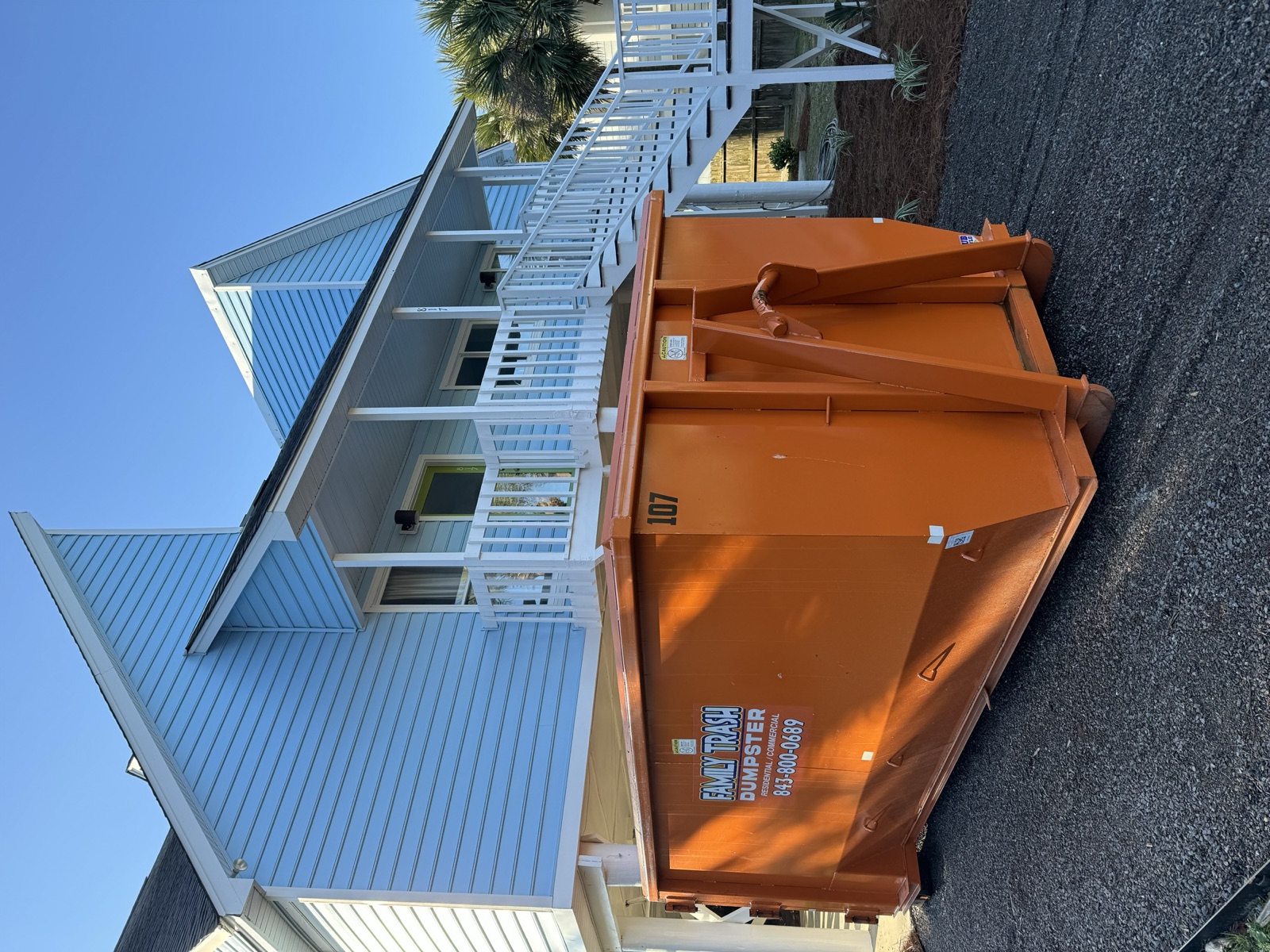
Most storm cleanups land in the middle to large sizes. A 13-yard handles a smaller yard and a garage clean-out. A 17-yard gives you more room for furniture and brush together. If you've got a big property or serious damage to deal with, the 22-yard is the one. These take household junk, furniture, wood, drywall, yard brush, and remodeling debris.
There's one important rule. The 13, 17, and 22 do not take heavy or dense material. If your storm job includes concrete, brick, dirt, sod, or roofing shingles off a damaged roof, that goes in the 7-yard instead. The 7-yard is the only size built for heavy loads, and clean heavy material heads to the recycle plant. If you're staring at a mix and you're not sure how to split it up, call and we'll talk it through. You can also look over our dumpster sizes to compare before you pick.
Know Where It Goes
Part of a good plan is knowing what can and can't go in the dumpster. We take the usual storm mess without a problem. What we can't take is batteries, chemicals, and electronics. So if a flood killed an old TV or you've got car batteries floating around the garage, set those aside and handle them separately. Keeping them out of the load keeps your pickup moving.
Delivery, pickup, and disposal are all included when you rent from us. We drop the dumpster, you load it on your own schedule, and we haul it off when you're done. Rentals run anywhere from 1 to 30 days, which matters after a storm because cleanup doesn't always happen in a weekend. On bigger jobs we can swap out a full dumpster for an empty one so you keep working without waiting.
Get It Set Now
The point of all this is to make one decision today so you're not making five of them in a panic later. Know the number. Know roughly what size fits your property. Know what stays out of the dumpster. When the next storm clears out and you're ready to start hauling debris to the curb, you'll already have the move figured out.
We're licensed and insured, we're local, and we pick up the phone. When you're ready to get a dumpster on the ground, call Tony at (843) 800-0689 and we'll get you set up.
Need a dumpster in Charleston? Call or text Tony at (843) 800-0689, or order online.
(843) 800-0689 Get instant pricing