
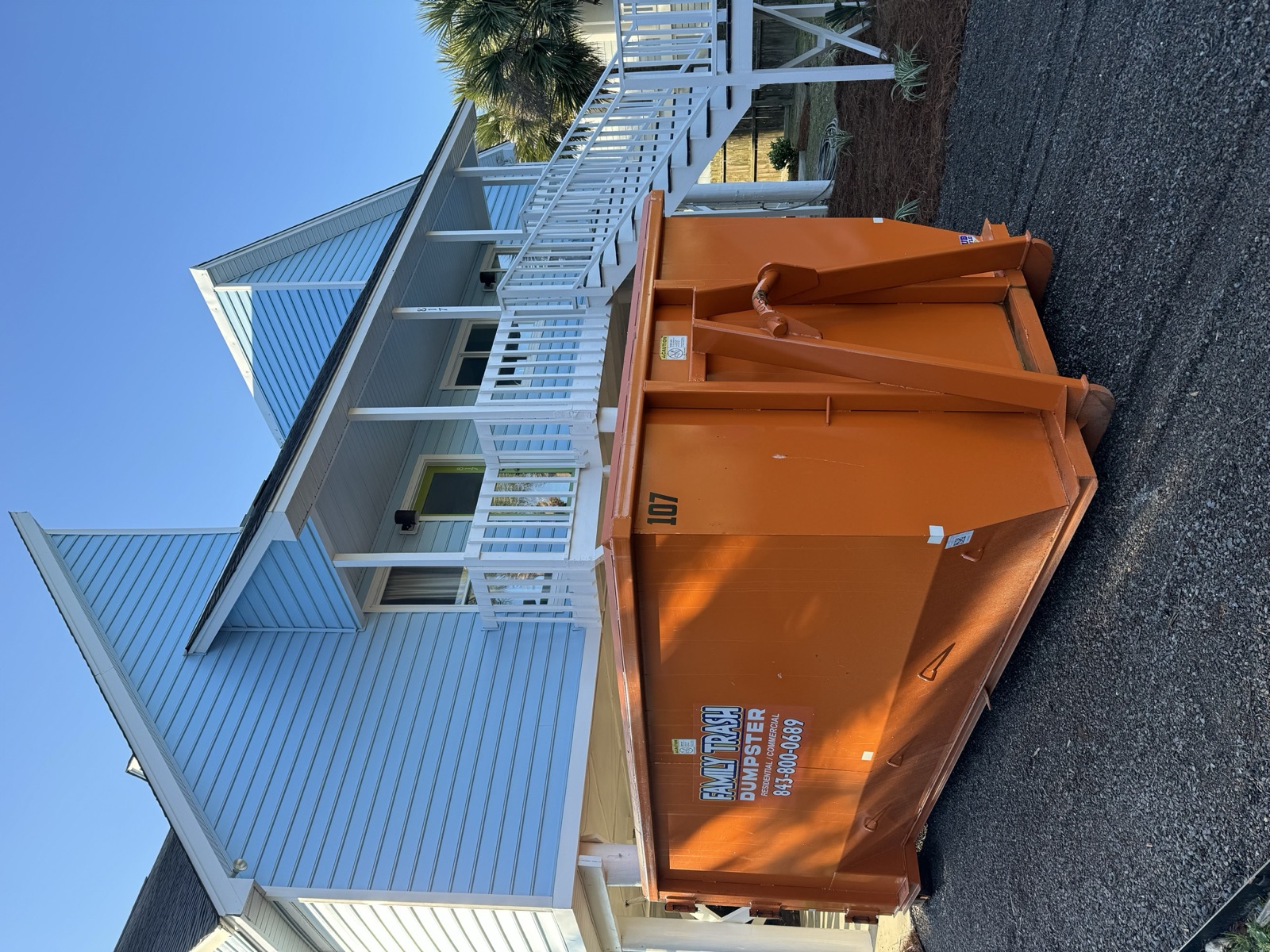
To remove water damaged drywall and floors after a storm, pull the wet material out quickly and load it into a 13-yard dumpster for a one or two-room gut. Water soaks into drywall, insulation, subfloor and baseboards. After water comes into a house, the cleanup usually means pulling that wet material out so the walls and floors can dry.
Load the debris straight into a dumpster as you go. Family Trash is a family-owned dumpster rental company across the Charleston area, based on James Island, and Tony can set a roll-off in your driveway for the gut.
Which size fits a water-damage cleanup?
Start with the 13-yard dumpster for one or two rooms of wet drywall and flooring, and tell us at booking how wet the material is. The 13 includes 1 ton and 5 days. If the water reached several rooms, or you're pulling flooring across a few rooms, the 17-yard dumpster includes 1.5 tons and 5 days. A gut of a full floor or house goes in the 22-yard dumpster, with 2 tons and 7 days.
Your booking terms set the charge for weight past the included tons. Our dumpster size guide compares the four sizes if you're deciding between two.
Why does wet debris weigh more?
Drywall, insulation, carpet and pad soak up water and stay wet inside a closed house. A soaked couch or mattress is far heavier than a dry one, and so is a roll of wet carpet. Plan wet drywall by weight as much as by space. A dumpster filled to the top with soaked drywall and flooring can go past its included tons.
What should you do before you pull anything?
Turn off the power to the flooded rooms at the breaker before you touch wet walls or outlets. If the electrical panel itself got wet, have an electrician check it first. Wear rubber gloves, boots and a mask, because floodwater can carry sewage and chemicals into the walls. Open the windows and run fans once the power is safe.
Then photograph each room: the water line on the walls, the flooring, and the furniture in place. Photograph the pile again before it goes in the dumpster. If you file an insurance claim, those photos help, and once the debris is picked up, the photos are the record of it.
How high should you cut the drywall?
A common practice is a flood cut: the drywall is cut a set height above the water line, the wet section comes out, and new drywall patches in cleanly once the wall cavity dries. Ask your contractor or insurance adjuster how high to cut before you start. Score a straight line with a utility knife or an oscillating tool, then pull the wet section off the studs.
Take the baseboard off first, since it sits in front of the cut. Pull the wet insulation out of the wall cavity with the drywall. Leave the studs exposed so air reaches them.
What comes out of a water-damaged room?
The usual pile is wet drywall, insulation, carpet and pad, baseboard and trim, laminate and engineered flooring, lower cabinets and vanities, swollen hollow-core doors, and furniture the water ruined. All of it goes in the 13, 17 or 22. If the subfloor is soaked, it may need to come up too, and plywood and particle board stack flat along the bottom of the dumpster.
Ruined appliances and furniture from a flooded garage or laundry room go in with the rest. Tell us what's going in when you book.
Why should you move quickly?
Charleston is humid, and wet drywall, insulation and carpet stay damp a long time inside a closed house. Material that stays damp can grow mold, so get the wet material out and open the walls so the framing can dry. With a dumpster in the driveway, you pull the drywall and load it the same day instead of stacking it in the garage, where it stays wet.
Call or text as soon as you know you need a dumpster, and we'll give you a delivery time. Family Trash is open seven days, and Tony answers after hours too.
How do you load wet debris?
Put the heaviest, flattest pieces in first and spread them across the floor of the dumpster: wet drywall, subfloor and cabinet sides. Roll carpet and pad tight and lay the rolls on top. Fill the corners. Spread the wet drywall from end to end instead of stacking it at one end, and stop loading at the top edge.
If the weather is dry, let wet carpet and pad drain outside for a day before you load them. That takes some of the water weight off.
What about a washed-out walkway or patio?
If the storm undermined a walkway or cracked a patio, plan that concrete as a separate load in the 7-yard dumpster.
Where should the dumpster go?
A driveway close to the door you're carrying debris through works best. Watch for standing water at the drop spot and tell us what you see. A dumpster on your driveway needs no permit. If the only open spot is a City of Charleston street, the city requires a permit, and you pull it.
Where can you find official storm debris information?
After a hurricane, the City of Charleston's Recovering from a Hurricane page links its guide to hurricane debris. Charleston County's hurricane page has a storm debris section. The SC Department of Environmental Services has a page on construction and demolition debris for residents.
How does the rental work?
You may be waiting on adjusters and contractors, so tell us if the cleanup may stretch, and we'll set up a longer rental. If the first dumpster is level with the top edge before the gut is done, call for a swap-out. The price shows in the online booking, and our dumpster rental cost page explains what's included.
Common questions about water-damage debris
How much wet drywall fits in a 13-yard?
A room or two of wet drywall and flooring fits the 13. Tell us how many rooms you're gutting and how high the water came, and we'll match the size.
Can soaked furniture go in the same dumpster as drywall?
Yes. Furniture, drywall, carpet and cabinets can all go in one dumpster. Count the furniture when you pick the size.
Should I let things dry before I load them?
Once your adjuster has seen the damage, load the drywall and insulation wet, as you pull them. Carpet and pad can drain outside for a day if the weather is dry.
Does the dumpster need to come before the adjuster visits?
That depends on your insurance. Photograph the rooms and the pile first, then ask your adjuster whether to wait before the debris goes in.
If you're looking at a wet house and not sure what size you need, text or call (843) 800-0689.
Need a dumpster in Charleston? Call or text Tony at (843) 800-0689, or order online.
(843) 800-0689 Get instant pricing