
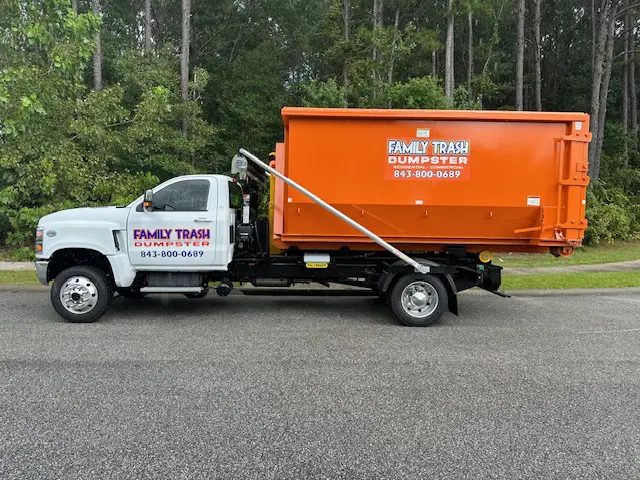
Before a house goes on the market, most of the work happens out of sight. You pull years of stuff out of closets, the garage, and the attic, and you figure out what stays, what goes with you, and what was always headed for the curb. That last pile is usually bigger than people expect. A roll-off dumpster in the driveway gives you one place to put it, so the clearing-out part of staging doesn't stall the rest.
I'm Tony, and Family Trash is based on James Island. We rent dumpsters and nothing else, so this is from the angle of getting one on your property and out of your way before a showing.
Why a dumpster beats truck loads to the dump
A lot of folks staging a West Ashley or James Island home start by hauling carloads to the transfer station on weekends. It works, but it drags out over weeks, and a half-cleared garage is hard to photograph. A dumpster compresses all of that into a few days. You load on your own schedule, and when it's full we pick it up. Delivery, pickup, and disposal are part of the rental, so you're not making separate dump runs.
It also keeps the mess off the lawn. An open pile by the road reads as "this house is a project" to anyone driving by, and that's the opposite of what you want when buyers are doing drive-bys before they ever call their agent.
Pick a size that matches the job
Most staging cleanouts are household material: old furniture, boxes, closet contents, broken shelving, mattresses, general clutter. That's exactly what the mid-size dumpsters are built for. For a typical three-bedroom declutter, the 13-yard is the one I steer people toward first. It holds a serious amount without taking up the entire driveway.
If you're just clearing a few rooms, an estate's worth of small stuff, or you're tight on space, the 7-yard is easier to tuck in beside a car. If the staging turns into light remodeling, swapping a vanity, pulling old carpet, redoing a closet system, you can step up from there. You can see all our dumpster sizes and the rough job each one fits.
One thing worth knowing up front: the 7-yard is the only size for heavy, dense material like concrete, dirt, brick, or roofing shingles. For a staging cleanout you're rarely throwing that, so the bigger dumpsters usually make more sense. If you're not sure which way your project leans, call or text and describe the pile.
What goes in, and what can't
For staging, almost everything you're clearing is fair game: furniture, wood, drywall scrap, yard brush from cleaning up the beds, and general household junk. The things we can't take are batteries, chemicals, and electronics. So that old TV, the paint cans in the garage, and the box of dead batteries need to go somewhere else. If you want the full rundown before you start loading, here's what goes in a dumpster.
Sorting those out early saves you a headache. You don't want to find a banned item at the bottom of a full dumpster the night before pickup.
Timing it around your listing
Staging runs on a calendar. Photos get scheduled, the open house gets set, and the cleanout has to be done before any of that. Rentals run anywhere from one to thirty days, so you can keep the dumpster for a single hard weekend or hold it across a couple of weeks while you work room by room. On a bigger clear-out, we can swap a full dumpster for an empty one so you're not stuck waiting.
My advice is to get the dumpster in early, while you're still in the decision-making phase. The driveway can sit half-loaded for a week without anyone seeing it, and the day before photos you do a final sweep, we pull it, and the property shows clean.
Driveway and curb appeal during the sale
Where the dumpster sits matters when you're trying to sell. Put it on the driveway or a side pad if you've got one, not blocking the front walk a buyer would use. We can place it to keep the front of the house clear in any drive-by photos or showings that overlap with your cleanout. If access is tight, tell me when you book and I'll plan the drop accordingly.
Booking it
Family Trash is family-owned, licensed and insured, and I answer my own phone seven days a week. We cover Charleston and the towns around it, so wherever your listing is, check the towns we serve and you're probably on it.
Questions about clearing a house before you list it
When in the selling process should I get the dumpster?
Before the photographer, not after. The listing photos are doing most of the work, and rooms photograph larger once the clutter is gone. People who wait until after the first showings end up rushing it.
What size clears a West Ashley house before listing?
A 13-yard covers most three-bedroom homes when you are clearing closets, a garage and the odd piece of furniture. If you are emptying a house completely, including an attic that has not been touched in years, step up to the 17 or 22.
Can I sort and donate while it is sitting there?
That is the point of keeping it a while. Rent it for a stretch of days, work a room at a time, and let the donation pile and the toss pile separate themselves. Anything still good is worth a donation run first.
How long can I keep it?
Anywhere from one day up to thirty. For a staging cleanout most people take a week or two so they are not forcing the entire job into one weekend.
Will a dumpster in the driveway hurt showings?
Only if it is still there during them. The usual order is clear the house, have it picked up, then photograph and show. Tell us your listing date when you book and we will time the pickup to it.
When you're ready, or if you just want help picking a size for your cleanout, call or text (843) 800-0689. Tell me the house, the kind of stuff you're clearing, and your photo date, and we'll get a dumpster in your driveway in time to stage and sell.
Need a dumpster in Charleston? Call or text Tony at (843) 800-0689, or order online.
(843) 800-0689 Get instant pricing