
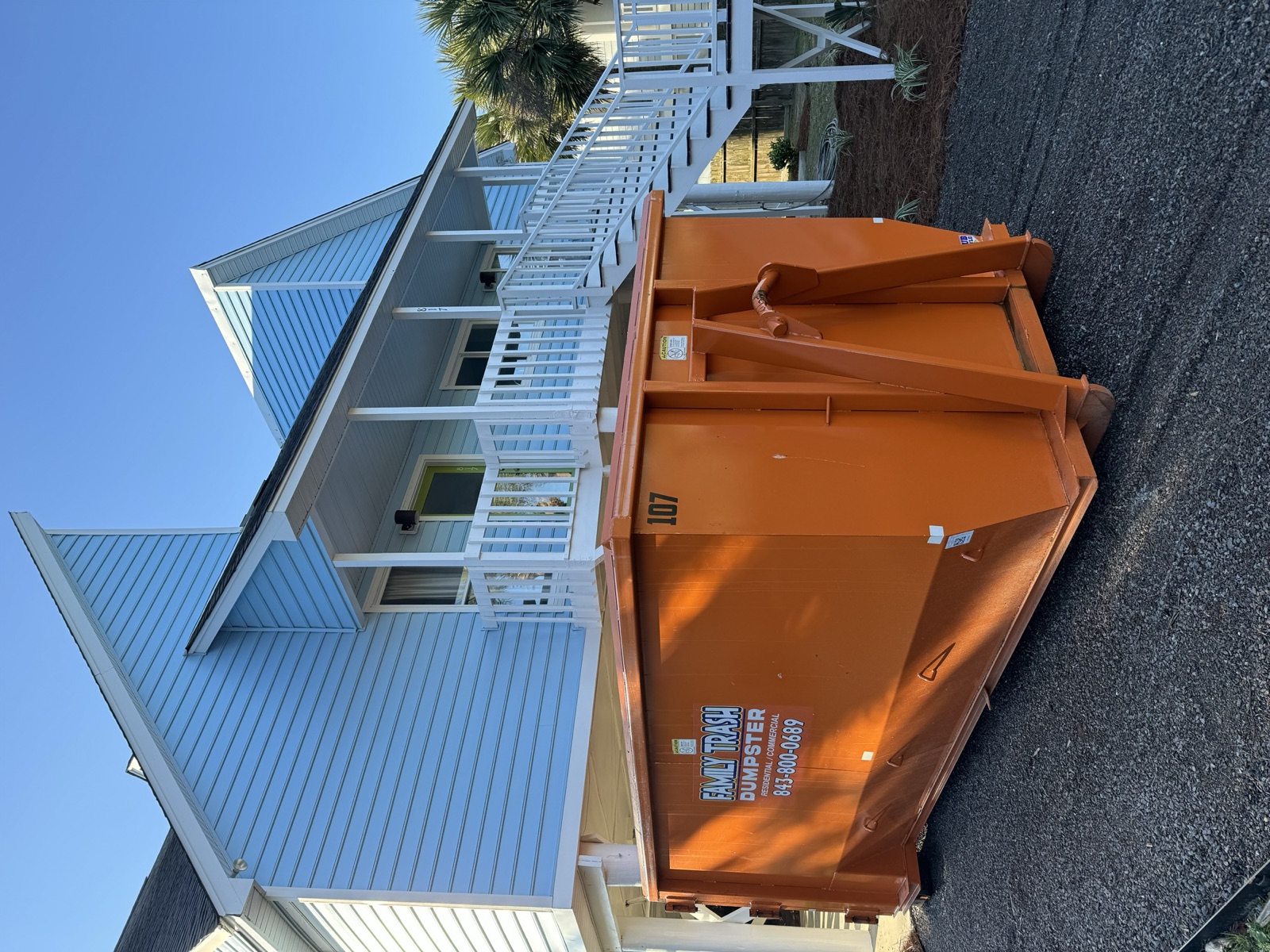
Some projects you can handle with a few truck runs to the landfill. Others bury you by the end of day one. The difference is rarely the size of the house. It is what you are tearing out and how heavy it turns out to be.
Here are the jobs around Charleston where a container in the driveway earns its keep, and what each one puts out.
Bathroom remodels
A bathroom looks small until it is in a heap on the lawn. Out comes the vanity, the tub or the surround, the toilet, the mirror, the old flooring, and the drywall behind all of it.
The trap is the tile. A mortar bed, a tiled shower pan, or an old cast-iron tub swings a light job into heavy territory fast. If your bathroom demo includes a tile bed or masonry, that part belongs in the 7-yard and the rest goes in a bigger container. A straightforward bathroom with no masonry usually fits a 13.
Kitchen tear-outs
Kitchens produce more bulk than almost anything else in the house. Cabinets, countertops, backsplash, appliances, flooring, and the drywall that comes with moving a wall.
Most single-kitchen jobs fit the 13-yard. Add a bathroom running at the same time, or a wall coming out, and step up to the 17. Countertops are the thing to flag: a stone slab is dense enough to matter, so mention it when you book.
Flooring replacement
Pulling flooring across a house adds up quietly, and the material decides the container.
Carpet and pad are bulky and light, so they roll into big soft bundles that eat volume in a 13 or a 17. Old hardwood comes up in planks with nails in every one. Tile is the different animal: the tile itself plus the thinset and backerboard underneath is dense, and a few rooms of it will hit a weight limit long before it fills anything. Tile floors point at the 7-yard.
Roofing jobs
Shingles are heavy, and that decides everything. A tear-off goes in the 7-yard, full stop, no matter how modest the pile looks stacked on the ground.
That container stays low on purpose so the truck can lift it and a clean load can head to the recycle plant. On a larger roof, plan a second one rather than overloading a single container. Then plan the nail cleanup, because a magnet run across the yard is the difference between finishing and hearing about it for a month.
Decks, fences, and outdoor builds
Deck boards, joists, old fence panels, and posts are bulky and light, so they suit the bigger sizes. The exception is the footings. Concrete piers coming out of the ground are dense and belong in the 7-yard.
Yard projects follow the same split. Brush and limbs go in the big containers, while dirt, sod, rock, and old pavers go in the 7.
Full-house work and cleanouts
A full gut or an addition is 22-yard territory, and it is usually a swap job rather than a single container: we haul the full one and set an empty in the same spot so demo does not stall.
Clearing a house before a move or a sale is the same bulk problem without the demo. Furniture, boxes, and years of garage contents are light and awkward, so a 17 or a 22 depending on how much is going.
Demolition and heavy material
Anything where the material is dense rather than bulky, so a patio coming up, a brick walkway, an old slab, a chimney, is a 7-yard job.
This is the single rule worth remembering across every project above. A clean heavy load out of the 7-yard goes to the recycle plant. Mix wood, drywall, or bagged trash into it and the entire load goes to the landfill instead, so keeping the streams separate is worth the small hassle of running two containers.
Picking the size without guessing
The pattern across all of it: dense material, meaning concrete, dirt, rock, brick, sod, and shingles, goes in the 7-yard. Everything lighter, meaning household junk, furniture, wood, drywall, cabinets, and brush, goes in the 13, 17, or 22. Jobs with both run two containers, and that is normal rather than a planning failure.
You can compare all our dumpster sizes, read the longer guide to choosing a size, or check what goes in a dumpster before you start loading.
We are family-owned, based on James Island, and we cover Charleston plus the towns around it. Describe the project and we will match the container to it. Call or text (843) 800-0689 and you will get Tony.
When a dumpster is not the right call
Not every job needs one, and it is worth saying so.
If the debris fits in one or two pickup loads of light material and you already own the truck, hauling it yourself is probably cheaper. If you need the material carried out of the house for you, that is a labor service rather than a container. And if what you are clearing is mostly furniture and appliances in usable condition, a donation pickup may take the bulk of it for free before you rent anything.
The line most people cross is around three truck loads, or the moment the material turns heavy. Past that, a container in the driveway stops being a luxury.
Common questions about renovation debris
Can I put demo debris and household junk in the same container?
Light material can share, so cabinets, drywall, wood, and furniture all ride together fine. What cannot share is heavy material. Keeping concrete and tile beds separate is what lets that load get recycled.
What size do I need for a full bathroom gut?
A 13 covers a straightforward bathroom. If a tile shower pan, a mortar bed, or a cast-iron tub is coming out, split it: the masonry in a 7-yard and the rest in the 13.
Do I need a permit to put it in front of my house?
Almost never. On your own driveway or property, no permit is needed. It only comes up when the container has to sit in the street or public right-of-way, and the property owner pulls that. Here are the Charleston permit rules.
What happens if my renovation runs longer than planned?
Rentals run from one day up to thirty, and on longer jobs we swap a full container for an empty one in the same spot. Renovations slip constantly, so this is the normal way a long remodel runs rather than an exception.
Can I put an old bathtub or toilet in?
Yes. Standard fixtures go in with the rest of the light debris. A cast-iron tub is the one to mention when you book, because the weight changes which container makes sense.
Need a dumpster in Charleston? Call or text Tony at (843) 800-0689, or order online.
(843) 800-0689 Get instant pricing